Module 4: Lessons from Market Crises and the Need to Adapt
By JOSEPH W. HANDLEY, Jr., Ph.D.
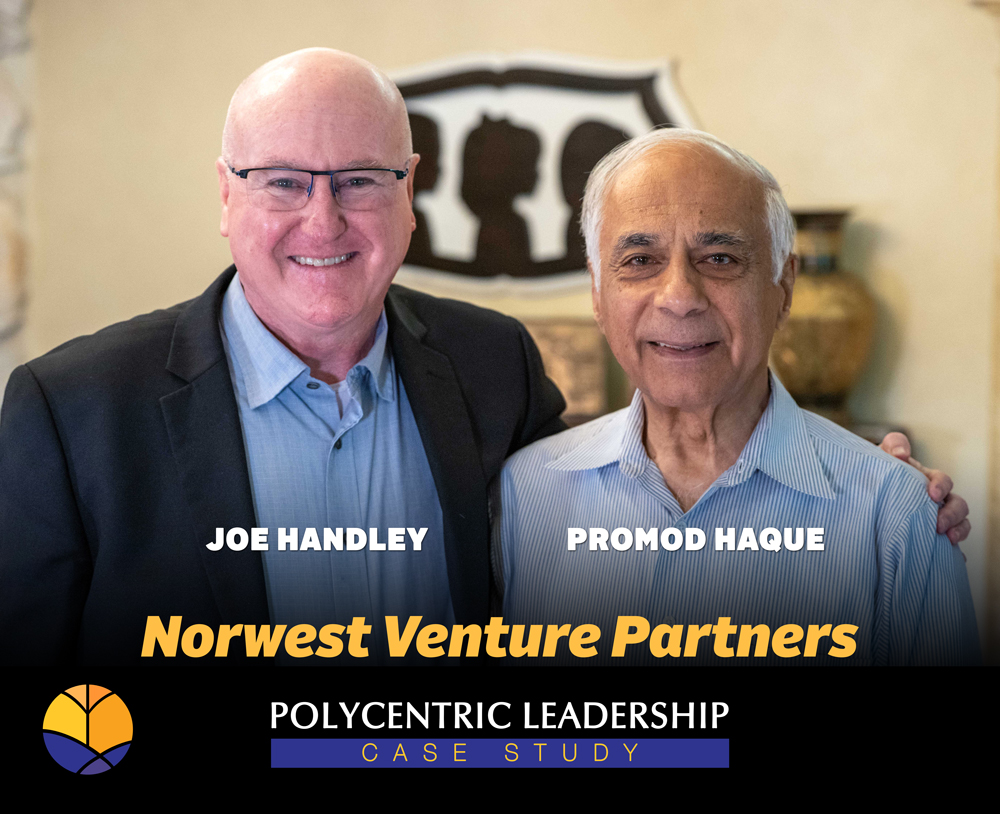
In the first three modules of this series, we explored Promod Haque’s leadership journey, Norwest Venture Partners’ commitment to diversification, and the critical role that trust plays in building a healthy polycentric culture.
In this module, our conversation turns to one of leadership’s greatest teachers: crisis. Promod reflects on the lessons Norwest learned during the dot-com boom and bust, revealing how periods of disruption often expose hidden vulnerabilities and create opportunities for organizations to become more resilient and adaptable.
When Success Creates Vulnerability
One of the challenges leaders face is that success can sometimes mask underlying vulnerabilities. As One of the challenges leaders face is that success can sometimes mask underlying vulnerabilities. As long as markets are growing, revenues are increasing, and opportunities seem abundant, it is easy to assume that current strategies will continue working indefinitely.
History tells a different story.
Again and again, organizations discover during moments of crisis that the approaches which fueled yesterday’s success are insufficient for tomorrow’s challenges. The danger is especially acute when too much expertise, investment, or organizational energy becomes concentrated in a single area.

This was one of the key lessons that emerged from the dot-com era.
As Promod recalls, the late 1990s were marked by extraordinary enthusiasm for internet companies. Investors poured money into businesses that promised to transform the economy. Valuations skyrocketed. Expectations seemed limitless.
Then reality intervened.
The boom quickly became a bust, and organizations throughout the technology sector felt the impact.
The Illusion of Safety
At first, Norwest appeared relatively protected from the collapse.
Promod explains that the firm had largely avoided direct investment in dot-com companies, focusing instead on enterprise technology businesses.
“We were so glad that we had not invested in the dot-com business … that we were only doing enterprise.”
— PROMOD HAQUE
Many organizations would have viewed this as confirmation that their strategy was sound.
But an important realization soon emerged.
While Norwest had avoided direct exposure to dot-com companies, many of the enterprise businesses they supported depended on those same companies as customers. When dot-com businesses began disappearing, the effects rippled through the broader technology ecosystem.
As Promod explained, enterprise firms were often providing software and infrastructure to companies that no longer existed.
The lesson was sobering.
Sometimes what appears to be diversification is actually another form of concentration. Dependencies often run deeper than leaders initially recognize.
This insight extends far beyond venture capital. Ministries, nonprofits, churches, and businesses frequently assume they are protected from disruption because they are not directly connected to a particular risk. Yet financial, relational, technological, and organizational dependencies often create vulnerabilities that remain hidden until conditions change.
Crisis Reveals What Structure Conceals
One of the reasons I find this part of Promod’s story so compelling is that crises have a way of revealing realities that are otherwise difficult to see.
During seasons of stability, highly concentrated strategies can appear extremely effective. Resources are focused. Expertise deepens. Decision-making may become more efficient.
But when unexpected challenges emerge, those same strengths can become liabilities.
A concentrated system often depends on a limited number of assumptions remaining true. If those assumptions break down, the entire system may struggle.
One lesson I draw from Promod’s experience is that polycentric systems often operate differently. Because expertise, influence, and activity are distributed across multiple centers, they are often better positioned to adapt when circumstances change. Problems in one area do not necessarily threaten the entire organization. Alternative pathways, perspectives, and opportunities already exist within the system.
This does not eliminate risk. But it does create resilience.
A Strategic Response to Uncertainty
Faced with the realities of the post-dot-com environment, Norwest made a deliberate decision.
Rather than increasing concentration, the firm moved toward greater diversification.
Promod describes the turning point succinctly:
“As our fund started to grow larger … we decided that we need to diversify.”
— PROMOD HAQUE
That decision would eventually reshape the organization.
As discussed in the previous module, Norwest diversified across three major dimensions: business domains, geographic regions, and investment stages. What is important here is understanding why they made those choices.
Diversification was not simply a growth strategy. It was a response to vulnerability.
The leadership team recognized that long-term health required more than expertise in a single category. The firm needed multiple centers of opportunity, multiple sources of insight, and multiple pathways for success.
In many ways, this reflects the heart of polycentric leadership. Rather than relying too heavily on a single source of expertise or opportunity, leaders intentionally create conditions where strength is distributed across the organization.
Learning to Adapt Before It’s Necessary
One of the most valuable leadership lessons in Promod’s story is that adaptation should not wait until a crisis becomes overwhelming.
Organizations often postpone change while existing systems continue to produce acceptable results. Unfortunately, by the time a disruption becomes obvious, opportunities for proactive adaptation may already have narrowed.
Healthy leaders remain attentive to emerging risks. They ask difficult questions. They search for blind spots. They examine where too much dependence exists on a particular leader, strategy, funding source, geography, market, or ministry model.
Polycentric leadership encourages this kind of thinking because it recognizes that no single center possesses everything needed for long-term success.
Resilient organizations build multiple pathways before they desperately need them.
Building Resilience for the Future
As I listen to Promod reflect on the dot-com era, I am reminded that crises often become catalysts for innovation.
The realization that even successful sectors can be vulnerable pushed Norwest toward a more diversified and resilient model. What could have been merely a difficult season instead became an opportunity to strengthen the organization for decades to come.
That lesson feels especially relevant today.
The challenges facing organizations continue to evolve at an accelerating pace. Technologies change. Markets shift. Global events reshape priorities. Leadership environments become increasingly complex.
In such a world, resilience matters.
Polycentric leadership offers one pathway toward that resilience by encouraging leaders to distribute expertise, cultivate multiple centers of influence, and remain adaptable when circumstances change.
As you watch this fourth video, consider the areas of your own leadership environment that may be built around a single source of strength. Where might hidden dependencies exist? What assumptions are no longer as secure as they once appeared to be?
Those questions often reveal the first steps toward building a healthier and more resilient future.
Video 4: Lessons from Market Crises and the Need to Adapt
In this module » https://vimeo.com/1202314799/fcba4f85a9
Promod recounts how the dot-com boom and bust exposed the dangers of over-concentration within a single sector of the market. He explains how Norwest’s decision to diversify across business domains, geographic regions, and investment stages became a strategic response to the limitations of centralized approaches and helped create a far more resilient organization.
Reflection Questions
- What centralized thinking or single-point strategies in your leadership context might be at risk of breaking?
- How can you begin building more resilience through polycentric principles?
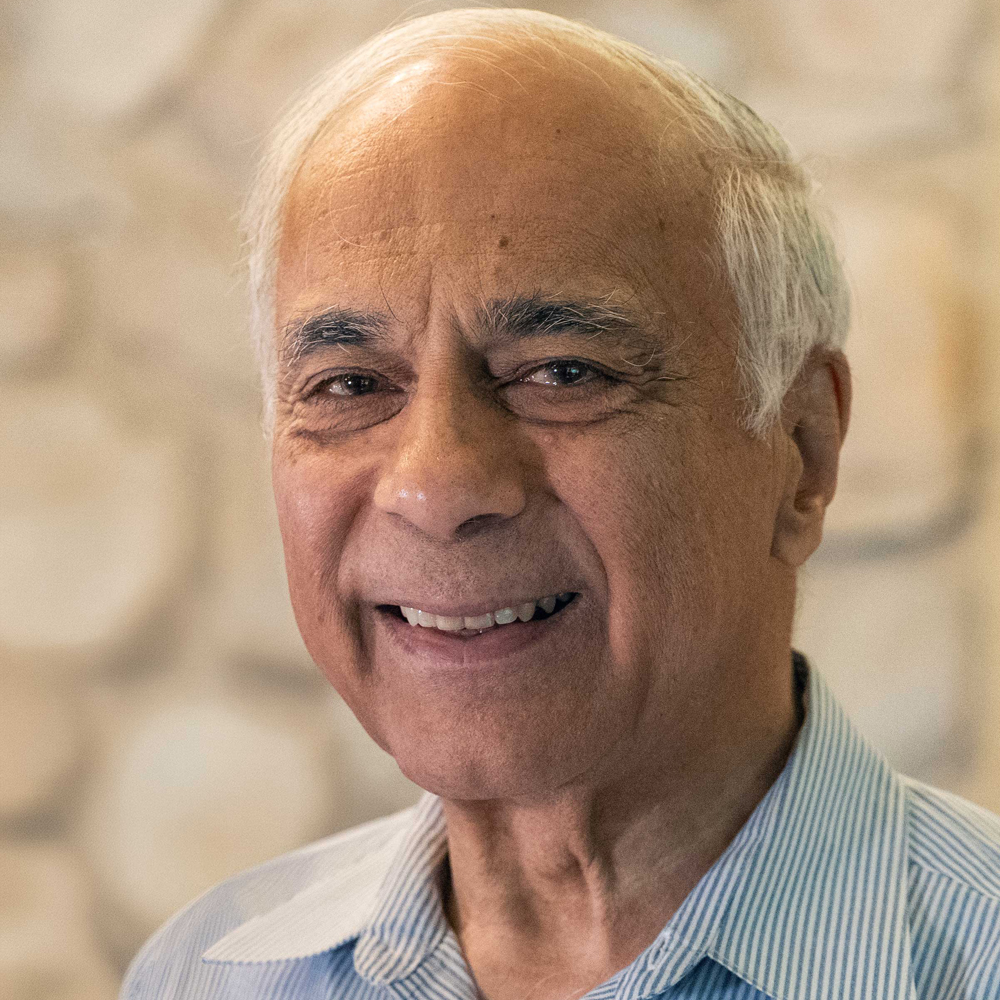
ABOUT PROMOD HAQUE
Promod Haque is a longtime venture capitalist and former Senior Managing Partner at Norwest Venture Partners, where he spent nearly four decades helping entrepreneurs build and scale innovative companies. Widely recognized as one of Silicon Valley’s most respected investors, Promod has guided numerous startups while mentoring generations of business leaders. Learn more at https://www.nvp.com
More Information
This post is the fourth in a 6-part case study series with Promod Haque:
- Part 1 – The Unexpected Path
- video link: https://vimeo.com/1202314798/a2dca8d701
- Part 2 – The Power of Diversification
- video link: https://vimeo.com/1202314796/c09687499c
- Part 3 – Trust Across Differences
- video link: video link: https://vimeo.com/1202314797/7437a4ac0f
- Part 4 – When Centralized Models Fail
- video link: https://vimeo.com/1202314799/fcba4f85a9
- Part 5 – coming soon
Photo Credits:
- Cover photo of lone tree by v2osk on Unsplash
- Inset photo of bubble by Danielle-Claude Bélanger on Unsplash