GUEST POST BY BRENT FULTON When Christians from China take the gospel to other nations, they encounter a double-edged cultural challenge. Not only do they need to adjust to the language and customs of their new host country; they must also negotiate relationships with Christian workers from other parts of the world with whom they […]
Guest Post

Movement Leadership: Embracing Chaord in the Missio Ecclesiae
GUEST POST BY MICHAEL COOPER History seems to repeat itself in a continual cycle of recapitulation. While there is a temptation to think of our particular period of history as unique, a student of the past quickly recognizes common characteristics and patterns that appear familiar across time. The study of leadership theory is no less the case as we […]
Crossover Global: A Case Study in Polycentric Leadership
In preparation for the World Evangelical Alliance Mission Commission Global Consultation (Jan 30 – Feb 3, 2023 in Chiang Mai, Thailand), Jay Matenga wrote:

Book Review: The Covenant Quarterly
Covenant Quarterly 81:2 – https://covquarterly.com/index.php/CQ/issue/view/25/7 Polycentric Mission Leadership – Book Review Joseph W. Handley Jr., Polycentric Mission Leadership: Toward a New Theoretical Model for Global Leadership (Oxford, UK: Regnum Books, 2022), 191 pp., $16.99. BOOK REVIEW BY PETER SUNG Joe Handley describes our world as increasingly complex, disrupted, and challenged, a world hurting for a […]

The Paradigm Shift: From Centralized to Decentralized Models in the Digital Age
GUEST POST BY MATTHEW NIERMANN In the landscape of the Internet’s evolution, we’ve traversed various phases, each marked by distinct characteristics shaping how we interact with digital content. Initially, with Web 1.0, the internet served as a repository of information, where users could only passively consume content.

What is Polycentric Mission?
Summary: The term polycentric mission has become popular. While the term has a more recent origin, the concept can be traced to the inception of the church. In its earliest days, no one place held authority. The West became a Christian center for a millennia, but now we see a return to polycentric Christianity that […]
Church Formation through the Gospel
#12 『Gospel and Leadership (11)』 GUEST POST BY KOHEI TAKEDA The Worldwide Body of Christ “Domo, domo, Takeda Sensei!” About 10 years ago, it was less than a week after we moved to Boston, America from Tokyo, Japan, there was an American who helped our family. This was my wife’s first time living abroad and […]

Polycentric Leadership: An Interview with Joe Handley
VISTA EUROPE INTERVIEW BY JOANNE APPLETON REPOSTED WITH PERMISSION Q: Where did your interest in Polycentric Leadership come from? I’ve always been more of a team person; even in sports, I preferred team sports like basketball to lone ones like running. Growing up, I also experienced diversity where my best friends were from different cultures. […]
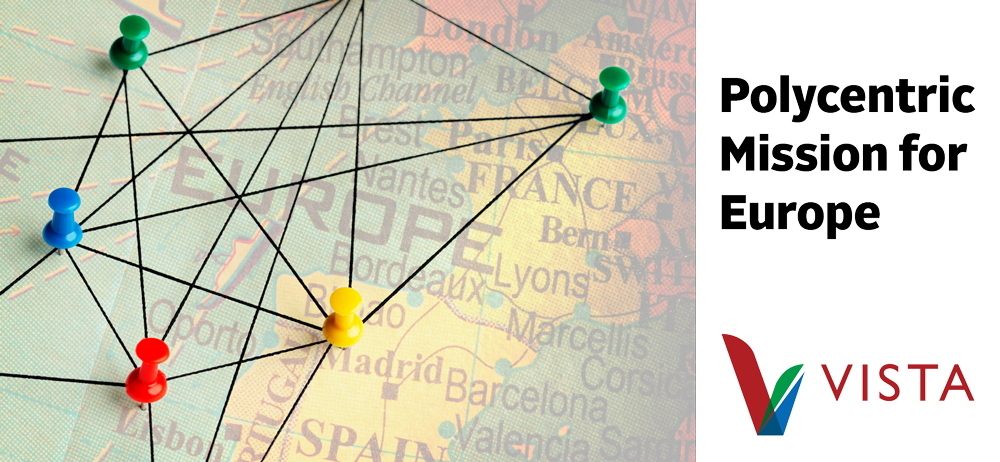
Polycentric Mission for Europe
GUEST POST BY JIM MEMORY In missiology, the study of Christian mission, our attempts at understanding the advance and retreat of Christianity through history and in the present day frequently involve the creation of categories and concepts that help us make sense of the complexities of the reality ‘on the ground’. We frame the data […]

Polycentric Christian Mission and Ministry: An Introduction: From Everyone to Everywhere
A PCL whitepaper by Graham Joseph Hill: Polycentric Christian Mission and Ministry: An Introduction: From Everyone to Everywhere