Module 2: Building a Polycentric Organization in Practice
By JOSEPH W. HANDLEY, Jr., Ph.D.
I enjoyed continuing my conversation with my friend Promod Haque as we shifted from his personal leadership journey to the ways Norwest Venture Partners has put polycentric leadership into practice.
In this second installment of our series, Promod shares how intentional diversification helped Norwest build resilience, distribute expertise, and thrive through changing market conditions. His insights reveal how healthy organizations distribute expertise, authority, and innovation across multiple centers rather than relying on a single source of strength.
Building a Polycentric Organization in Practice
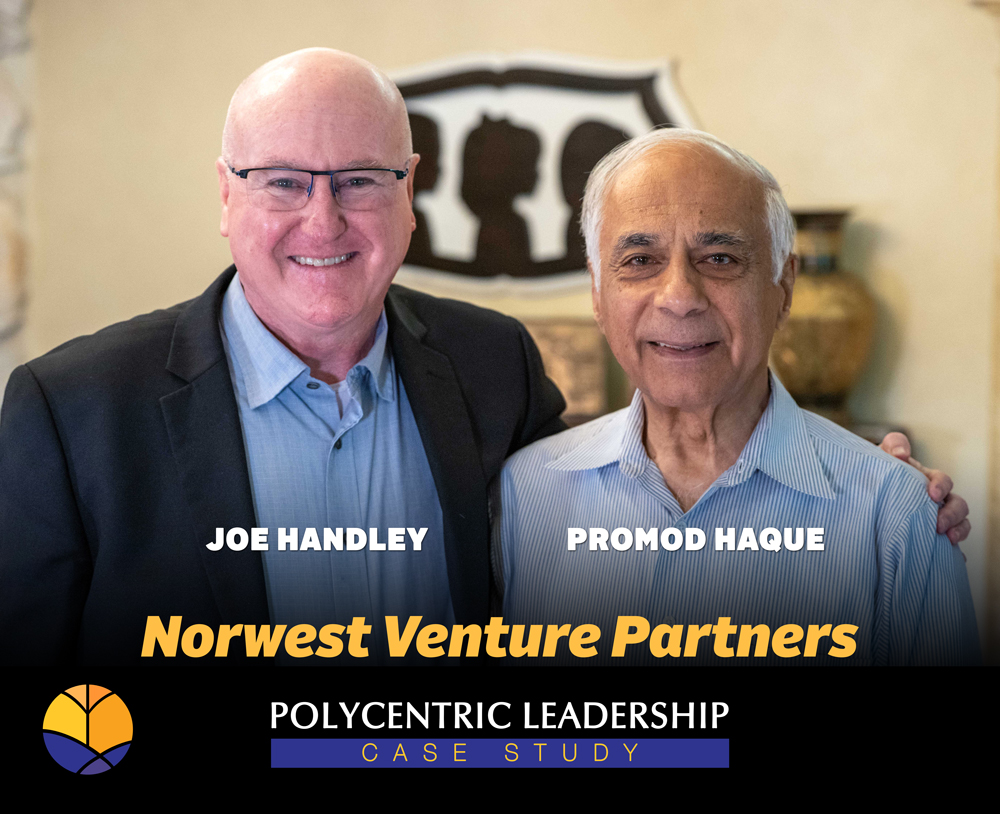
I wanted to feature Norwest Venture Partners as a case study in polycentric leadership because their experience shows how these principles work in the real world. Polycentric leadership is not merely a theoretical framework. It is a practical approach to building resilient organizations that can adapt, innovate, and thrive amid uncertainty.
As Promod and I discussed Norwest’s growth over the years, it became clear that many of the firm’s most important decisions reflected a fundamentally polycentric way of thinking. Rather than concentrating expertise and risk in one area, Norwest intentionally created multiple centers of influence and competence throughout the organization.
The result was not just growth. It was resilience.
Recognizing the Danger of Concentration
When Promod and his partners first established themselves in California, Norwest was heavily focused on enterprise technology investments. It was a logical strategy and one that produced considerable success.
Then came the dramatic rise and fall of the dot-com era.
Many firms suffered significant losses because they had concentrated their investments in a single booming sector. Norwest had largely avoided direct exposure to the dot-com frenzy, which initially protected the firm from significant damage.
Yet the story didn’t end there.
As Promod explains, many enterprise companies served dot-com businesses. When those businesses collapsed, the effects eventually rippled into adjacent sectors. Even organizations that appeared insulated from disruption discovered they were more vulnerable than they realized.
That experience reinforced an important lesson: no matter how successful a particular area may be, over-reliance on a single center of expertise creates risk.
Polycentric leaders understand this intuitively. They recognize that strength comes not from uniformity but from interconnected diversity.
Diversifying Across Domains
In response, Norwest began intentionally expanding beyond a single investment category.
Promod describes what became the first of three major diversification strategies:
“We started to do enterprise, we also started to do e-commerce … and then we also started to do a little bit of consumer and then healthcare.”
— PROMOD HAQUE
Rather than viewing the organization as a single investment practice, Norwest developed multiple centers of expertise. Different teams focused on different market sectors, bringing unique perspectives, networks, and opportunities to the broader organization.
This is one of the defining characteristics of polycentric leadership. Instead of concentrating knowledge in one group or one leader, organizations intentionally cultivate expertise across multiple domains.
The benefit extends beyond risk management. Diverse perspectives create opportunities for innovation. Teams learn from one another. Knowledge flows in multiple directions. The organization becomes stronger because its strengths are distributed rather than centralized.
Churches, ministries, nonprofits, and businesses can all learn from this principle. When every major decision, innovation, or initiative depends on one leader or one department, the organization becomes fragile. When multiple leaders contribute specialized knowledge and influence, resilience increases.
Expanding Influence Through Geography
Norwest’s second diversification strategy involved geography.
As new technology ecosystems emerged around the world, the firm recognized opportunities outside its traditional centers of activity. Promod and his colleagues began investing in regions such as India and Israel, both of which were rapidly becoming significant innovation hubs.
What is striking about this decision is that it reflected more than market awareness. It reflected a willingness to acknowledge that valuable ideas emerge from many locations.
Polycentric leadership rejects the assumption that innovation must come from a single headquarters or dominant center. Instead, it recognizes that creativity and leadership can emerge from multiple contexts simultaneously.
Promod explains it simply:
“We’ve got three axes of diversification … domain, geography, and stage of investments.”
— PROMOD HAQUE
That statement may sound like a business strategy, but it also reveals a leadership mindset. Healthy organizations look beyond their immediate circles and actively seek wisdom, talent, and opportunity from diverse locations.
Many organizations struggle because they assume the most important ideas will always originate from familiar sources. Polycentric leaders know better. They intentionally create systems that allow new voices and perspectives to emerge.
Thinking Across Different Time Horizons
Norwest’s third diversification strategy focused on investment stage.
As startup growth cycles became longer, firms often had to wait many years before seeing meaningful outcomes. Rather than relying exclusively on early-stage investments, Norwest expanded into growth equity opportunities that could produce results on different timelines.
This created balance within the portfolio and reduced dependence on a single approach.
The lesson extends far beyond venture capital.
Many organizations unknowingly place all their hopes in one strategy, one program, or one timeline for success. Polycentric leadership encourages leaders to think more broadly. Different initiatives mature at different speeds. Different teams contribute in different ways. Long-term health often depends on maintaining multiple pathways toward impact.
Resilience Through Multiple Centers
What I appreciate most about Promod’s insights is that diversification was never merely about reducing financial risk. It was about building an organization capable of adapting to change.
Norwest created multiple centers of expertise across industries. They expanded influence across multiple geographies. They balanced investments across multiple stages of growth.
Together, these decisions created a more resilient organization.
In many ways, this is a practical picture of polycentric leadership. Rather than depending on a single center of authority, capability, or knowledge, organizations flourish when leadership and expertise are distributed throughout the system.
As you watch this second video, consider where your own organization may be vulnerable because too much influence, knowledge, or decision-making resides in one place. The goal is not fragmentation. The goal is a healthy network of interconnected strengths working together toward a shared mission.
That is precisely what made Norwest’s approach so effective, and it is one of the clearest examples of polycentric leadership in practice that I have encountered.
Video 2: Building a Polycentric Organization in Practice
In this module » https://vimeo.com/1202314796/c09687499c
Promod explains how Norwest Venture Partners adapted and grew by intentionally diversifying across key dimensions of its business. By creating multiple centers of expertise and influence rather than relying on a single centralized model, the firm developed greater resilience, adaptability, and long-term effectiveness.
Reflection Questions
In your own context (organization, church, or team), where might over-reliance on a single center of leadership or expertise be creating vulnerability? What would diversification look like?
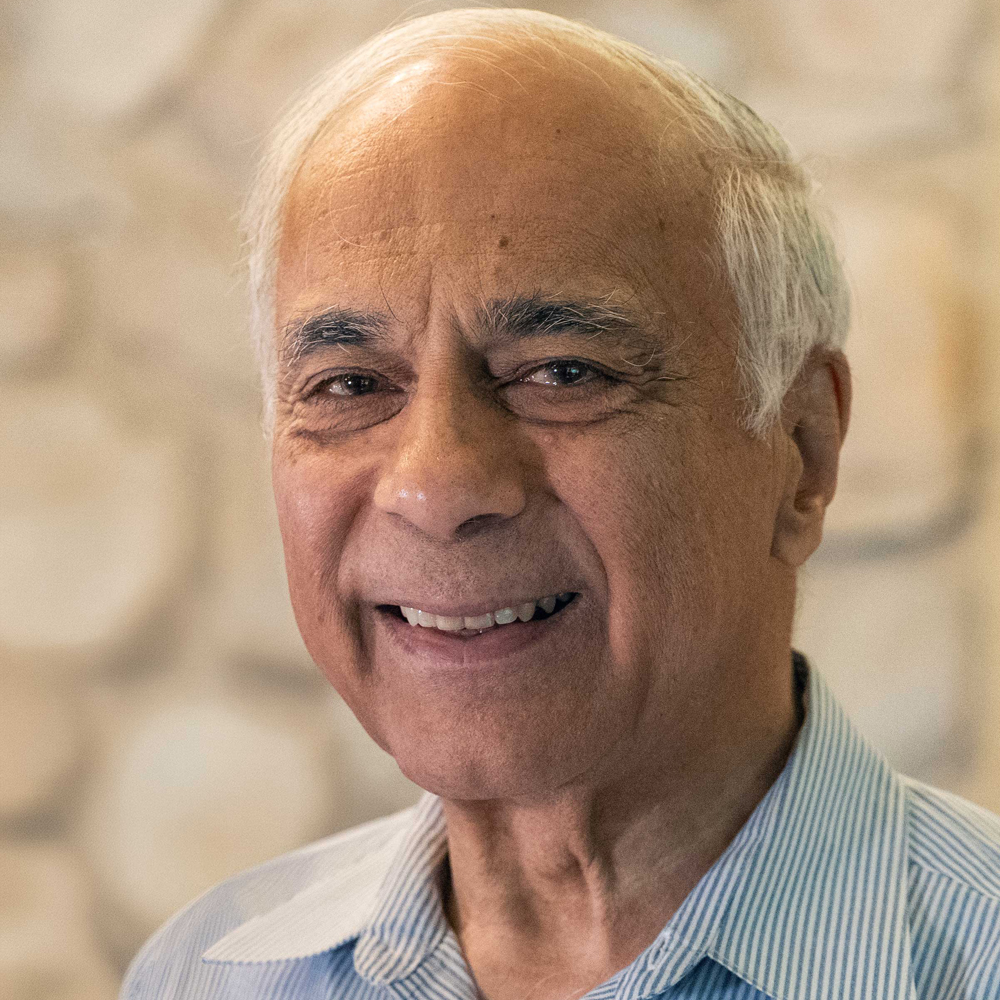
ABOUT PROMOD HAQUE
Promod Haque is a longtime venture capitalist and former Senior Managing Partner at Norwest Venture Partners, where he spent nearly four decades helping entrepreneurs build and scale innovative companies. Widely recognized as one of Silicon Valley’s most respected investors, Promod has guided numerous startups while mentoring generations of business leaders. Learn more at https://www.nvp.com
More Information
This post is the second in a 6-part case study series with Promod Haque:
- Part 1 – The Unexpected Path
- video link: https://vimeo.com/1202314798/a2dca8d701
- Part 2 – The Power of Diversification
- video link: https://vimeo.com/1202314796/c09687499c
- Part 3 – coming soon
Cover photo of an aerial view of crossroads by Jitian Pan on Unsplash