
Observations from cohorts in Latin America
ABSTRACT
Two seasoned cross-cultural practitioners reflect on a live experiment in polycentric leadership within a congregation in Marv’s consulting experience. In this context a pastor seeking to develop a collaborative leadership team. Drawing on parallel experiences in the United States, Latin America, Hong Kong, and the Caribbean, this case study surfaces the dynamics of patron-client culture, the slow work of empowerment, the fragility of distributed leadership under pressure, and the surprising freedom that comes when a leader learns to lead from a collaborative process rather than from strengths alone.
Background
A congregation without its center
The community at the heart of this case study is a congregation that has from its birth oriented itself around a single pastoral figure, a typical leadership structure in that culture. Francisco (Not his real name) is not merely a leader in a functional sense; he has been the gravitational center of the community’s identity, spiritual life, and decision-making. Over time, however, he relocated away fromthe community. He now returns frequently to preach and meets regularly with the leadership team for planning and training via the internet. The leadership team and the congregation still look to him strongly as their lead. Their relational architecture is in transition and has not yet matched the new geographic reality.
It was into this space that Marv Gibbs — working currently across three active cohorts spanning Trinidad, the Dominican Republic, and Costa Rica — began introducing the concept of polycentric leadership. Not as a wholesale restructuring, but as a provocation with this key question: what if leadership could be distributed across the gifts already present in a team of leaders?
I picked up on the term polycentric just to provoke their thinking a little bit more, The team really want this — an understanding of how they can lead as a team from their individual strengths.
— MARV GIBBS
The cultural challenge
Patron-client dynamics and the weight of inherited hierarchy
Before any leadership model can be introduced, the practitioner must reckon with what is already operating invisibly. In the context under consideration, the pastor holds a revered position, researchers describe as a patron-client culture — a deeply embedded relational architecture in which community members direct loyalty, deference, and need toward a central patron figure. The patron, in this case is not simply respected; he is the conduit through which resources flow. Training, financial support, teams coming to participate in community projects and training resources are still provided by his sources and are under his control. In this transition, this provision of resources continues to give reinforcement to his singular centrality as leader.
This dynamic is not unique to Latin contexts. Gibbs draws a parallel to his years working in Hong Kong, where Confucian hierarchies similarly forbade questioning those in authority. Input and evaluations were only accepted from “inside” the select hierarchy and outside input was rejected. In South Asian settings, the “sanctified guru” model persists even among leaders who intellectually embracedistributed leadership. The default, under pressure, as Handley noted, is always to revert.
Gibbs observed in the United States, this same attitude could be part of resistance to change generating conflict and aggression rather than a spirit of collaboration. Permissions were granted in a symbolic sense and any “change agent” was welcome as long as the “changes” were sanctioned by the central patron figure.
Cultural patterns that resist polycentrism:
- Patron-client (Latin America, SE Asia): The patron distributes resources and blessing; clients pay homage and do not question.
- Guru model (South Asia): The sanctified leader holds spiritual authority that cannot be redistributed without violating the relational order.
- Confucian hierarchy (East Asia): Questioning authority is itself the transgression, regardless of the content of the challenge.
- Visionary Individualism (United States): Symbolic deference to team or group decision making is real but crisis drives decision-making back to a hierarchical structure.
Gibbs noted this U.S. pattern from his experience while working on his doctorate in the Los Angeles area in 2002-2007: organizational interest in team-based, distributed decision-making evaporated almost overnight when an economic crisis hit the United States. “Swoosh — right back up to the autocratic kind of top-down leader,” he recalled. This experience aligns with other observed realities. Crisis, real or perceived, tends to collapse polycentric experiments back to monocentric forms. The model must be resilient enough to survive turbulence, not just thrive in calm.
The intervention
Soft-pedaling it: a gift-based approach to redistribution
Handley observed, rather than confronting the hierarchy directly, in promoting polycentrism the practitioner’s approach uses obliques — working with the community through the APEST framework (Apostle, Prophet, Evangelist, Shepherd, Teacher) as a theological entry point. The logic is straightforward: no single pastor carries all five ministry functions. If a leadership team can name which gifts each person holds, it becomes possible to say a single pastor is no longer the center.” Rather, “these are the gifts of the team with one is identified as the apostolic leader — another one who teaches, and another as the one who is gifted in evangelism.” The polycentric model enters through affirmation rather than displacement.
Gibbs tested this in practice. When the group was asked directly — who among you is gifted in specific areas? — they could name the evangelist. They could name the pastor. They identified the financial person. The gifts were visible; what is in transition is the permission to act from those gifted positions.
Process
Three moves toward distributed leadership
1. Name the gifts in the room
Use theologically-grounded frameworks (like APEST) to map existing gifts to existing people — without framing it as replacing the central leader. The point is not subtraction but addition: My pastor friend is still the apostolic anchor in this transition period. But who is the teacher? Who is the evangelist? Who is the pastor and who is the Sheperd?
2. Assign and empower in public
The key move is not private delegation but visible empowerment. From his experience teaching in in Cambodia, when he co-taught with a local leader the community could see the gifting. The local leader was later sent to teach in another country, his credibility became legible across the region. Visibility matters — the community needs to witness the redistribution, not just be told about it.
3. Wait and hold the line (about three years)
Cultural change at this depth is not a project with a deadline. Handley noted that genuine internalization of polycentric norms takes approximately three years of consistent modeling. Gibbs recalled how progress in his work with a leadership team in Costa Rica was noted when they first told him “No” to a staffing idea. The central leader must repeatedly resist the pull to recentralize — and the emerging leaders must grow into owning their roles, rather than performing them at the patron’s pleasure.
Current challenge
When assigned leaders won’t own their roles
The live challenge Gibbs named in this conversation is not theoretical. His pastor friend has assigned responsibilities to members of the leadership team — and they are functioning but not owning those responsibilities. They don’t yet prioritize being together, some members miss meetings, while deeply committed to relational interaction, the team has yet to prioritize and own unity and consistency as aviable factor. They treat their roles with sincere commitment but still as “assigned” functions. They remain relationally warm but operationally hold their functions as stewards rather than owners.
Gibbs’s diagnosis was that the problem may not be individual failures of character, but a deeper cultural misalignment: their casual culture and relational fabric may, at this moment, outweigh their sense of kingdom responsibility. They have not yet made the internal transition from being recipients of a leadership “assignment” to being agents within a shared leadership structure. They have been given responsibilities without internalizing ownership.
They’re just not yet owning what they’re doing as kingdom work requiring specific prioritization.
— MARV GIBBS, on the cohort’s team members
This is a critical threshold in polycentric transition. The question of whether the right people are in the right roles is unavoidable. Handley raised the possibility that the team may need to revisit the composition of the team — not as a failure of the model, but as a necessary discernment step. A polycentric structure requires leaders who want to lead, not simply people who accept roles withoutinternal ownership.
Structural insight
Polycentrism doesn’t mean the center never holds
One of the most important clarifications Gibbs emphasized was this: polycentric leadership is not the elimination of decisive leadership. Key terms for such leadership are “facilitation” and “Guidance” are necessary to empower growing polycentric leadership. There are moments such as — stalemates, crises, moral clarity — when the experimental phase may have set-backs or even fail! In those cases, a central leader may need to step in and help re-align the vision. This role is essential in a transition. Without it the team may feel abandoned. A person with mature vision, values, and organizational knowledge must simply make the call. Handley added, waiting too long for consensus in a crisis is its own kind of failure.
The mature polycentric leader holds two capacities simultaneously: deep relational accountability to the team, and the courage to make an autocratic decision when the moment demands it. The failure mode of soft-leadership models is that they can mistake process for wisdom and collaboration for authority. Gibbs’s lived experience in patron-client cultures has sharpened his understanding of this: the community needs to trust that when a decision is required, someone will make it — and own it.
1. Gifts, not positions
Distributed leadership works when roles follow discerned gifts — not when responsibilities are assigned to preserve relationships.
2. Visibility over delegation
New leaders must be seen leading in public — not just handed a role in private — for the community to shift its trust.
3. The patron must release resources
When the central figure controls the resource pipeline, the patron-client pattern is structurally maintained regardless of rhetoric.
4. Crisis will test everything
Polycentric structures revert under pressure unless the model is embedded deeply enough to hold — roughly three years of consistent practice.
Practitioner reflection
Leading in the fourth quarter: Marv Asfahl Gibbs on his own transition
What makes this case study unusual is the degree to which Gibbs himself is implicated in its lessons. At 87, actively coaching three cohorts across Latin Amierica and the Caribbean, he is not an outside observer of these dynamics — he is living them.
He spoke to Handley with remarkable candor about the five years following his departure from pastoral/relational ministry when he moved into “retirement.” During that time he was never invited to preach from a pulpit. “I experience depression. I got angry! I felt my call had not been lifted but I was silenced.” I learned what it means when Jesus said ‘take up your cross and follow me.’ ” The silence was the cross I had to bear. And in retrospect, it was the season that formed the leader he is now — one who can hold frameworks loosely, challenge without pronouncing, provoke without insisting.
Our polycentric magic — our giftedness, our participation in a team — has to take on new shape in the fourth quarter. What I discovered is that I am now free to ponder. I don’t have to make pronouncements. I can just embrace the joy of watching young leaders grow as they are challenged in their character development.
— MARV GIBBS
This is, perhaps, the deepest insight the case study offers. The most mature expression of polycentric leadership may not look like building a well-distributed team. It may look like a seasoned practitioner learning to lead from a posture of inquiry rather than authority — modeling, through their own life, the very relinquishment and alignment they’re asking others to practice. Being pulled deeper into what Jesus noted as “I and the Father are one” is vital to this process.
Gibbs described his “prayer in motion” rhythm: He’s a biker with a goal to complete a 25,000-mile virtual ride around the world and at this writing is about 800 miles from his goal. One of his routes is a three-mile loop on a mangrove-lined road near where he lives in Southern Florida. He this stretch of road his cathedral. He prays through names alphabetically — one person per loop. “When I get to “J” he said with a smile, “you’re often in my prayers.”
The man teaching teams to distribute leadership is himself learning, at 87, how to let go of the platform — and discovering in that letting go a freedom he could not have manufactured on his own.
· · ·
Key takeaways
What this case surfaces for the polycentric model
Practitioner checklist
- Map the resource flows first. Who controls the financial pipeline? Until that structure shifts, polycentric language will run on top of patron-client mechanics.
- Use indigenous theological frameworks as on-ramps. APEST, the priesthood of all believers, the body metaphor — these open doors that “leadership theory” cannot.
- Empower publicly. Co-teach. Send emerging leaders to speak elsewhere. Let the community witness gifting in action.
- Expect the three-year threshold. Don’t mistake early enthusiasm for deep change. Plan for a multi-year arc.
- Distinguish accountability from ownership. Assigned roles without internal ownership will fail. The right people must genuinely want the responsibility.
- Reserve space for decisive leadership. A healthy polycentric culture must also be able to act — stalemates are not the same as consensus.
- Model the relinquishment you’re asking for. The most credible polycentric argument is a leader who has genuinely let something go.
Marv Gibbs, in conversation with Joe Handley
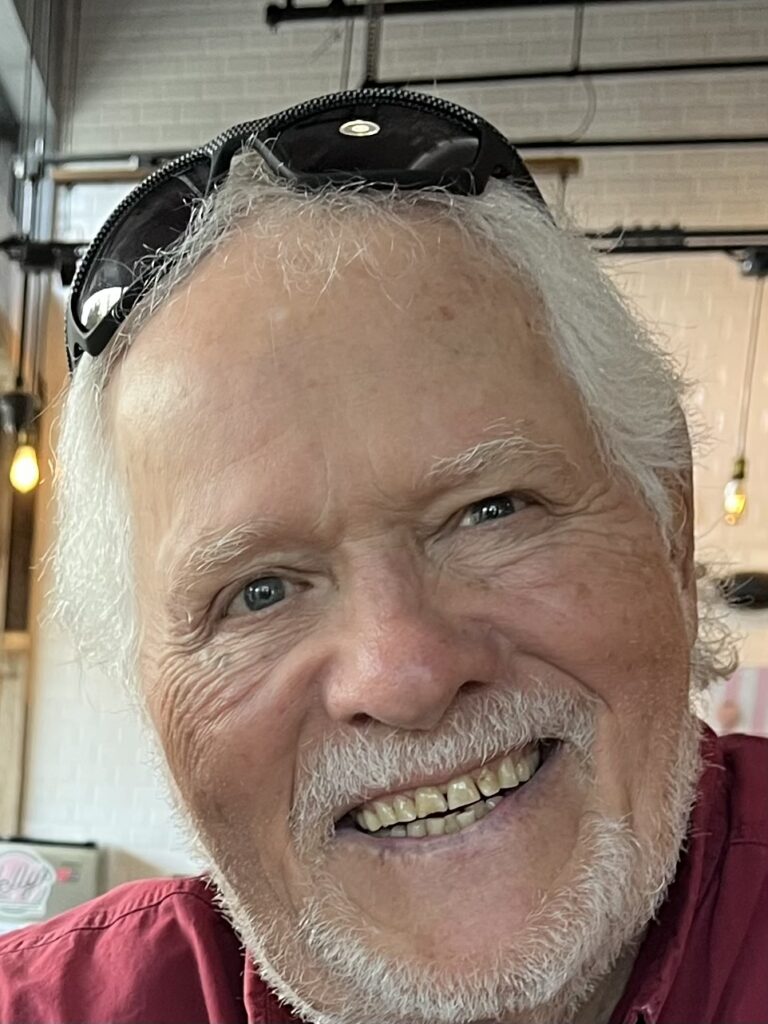
Dr. MARV GIBBS
Cross-cultural leadership coach & educator — 87 years old, still focused on leadership development.
More Information
Cover image by BoliviaInteligente on Unsplash