A Case Study in Polycentric Mission
by ROBERT ADAIR
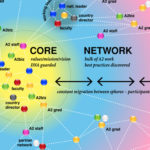
From 2011 to now, A3 (formerly Asian Access) missionaries (A3m) have made two transitions that have placed them under polycentric governance. This case study will attempt to explain the context and challenges of the current structure.
Background
In 2011, A3 formed a strategic partnership with SIM to deploy missionaries to Japan. SIM provided operational support and mobilization. A3 provided 40+ years of experience in Japan and a receiving entity for SIM missionaries worldwide. Then in 2020, A3 began transferring control of A3’s religious status in Japan from the board of A3i to the board of A3 Japan (A3J), with A3i retaining responsibility to supervise the missionary team.
The current lines of authority are summarized below:
- A3i (A3 International) – Direct oversight and supervision
- A3J (A3 Japan) – Strategic deployment of missionaries and legal status in Japan
- SIM Sending Office – Employer in sending country – accountability in finance, legal standing in sending country, HR policy (child safety, security, insurance, retirement, etc.)
In addition to the entities above, which have final authority in specific areas, several other stakeholders have varying levels of responsibility in missionary deployment. These include the missionaries’ local ministry partners, sending churches, and SIM International.
Benefits
Ideally, in this structure, each entity can focus on its strengths. For example, A3J can concentrate on the strategic deployment of missionaries without having to understand the labor laws or be responsible for receipting in multiple countries. The missionary team also has access to people, finances, and other resources from numerous streams. So, multiple organizational are committed to helping the missionary team pursue and achieve their call in Japan.
Challenges
Two key challenges are facilitating collaboration and strengthening relationships between the organizations. With divergent lines of reporting and accountability, there is not a clear, central venue to report the overall situation and struggles of the missionary team. There are also the competing tensions of organizations taking responsibility for areas outside of their sphere or significant areas being overlooked.
Policy example (internet security): A3i and SIM USA have independent internet security policies. A3i instructed the missionary team to update their passwords in response to a security breach. A missionary noticed that the method being used by A3i was in violation of SIM USA’s policy and reported the issue to SIM. In response, a SIM security team member told the missionary team to disregard the instructions from A2i and did not include A3i in this communication. There were two significant problems in this case.
- SIM and A3i policy were out of alignment
- SIM’s response to this rub unintentionally undermined A3i leadership
Whose responsibility is it to recognize areas where policy is out of alignment? How are these issues resolved in a collaborative way that does not undermine authority or trust?
Strategy example (who controls the faucet?): Every group involved in the partnership is committed to seeing Japan reached with the gospel. The sending offices have a rigorous screening process for candidates. A3m also interviews all candidates who have passed their sending office’s screening process before accepting them for placement in Japan. This became an issue recently when A3 was in discussions with a SIM sending office hoping to send a missionary to Japan for the first time.
The sending office struggled with the idea of the receiving entity interview. From their perspective, they are responsible for missionary intake, and the receiving entity showed a lack of trust and overstepped their role. The receiving entity felt the need to ensure the candidate was a good fit. Instead of collaborating, the dynamic deteriorated into a minor conflict.
How do you build relationships in a diverse and distributive leadership structure? How do you lead communally when there isn’t a clear motivation to develop horizontal relationships within the governance structure?
Where do we see the themes?
The themes of polycentric leadership are clearly defined in this 2021 Lausanne article. Reflection on how these themes are expressed in the partnership between A3i, SIM, and the A3J in Japan highlights areas that are doing well and others in need of significant improvement.
First, where are we doing well? Charisma is evident in the values-based decisions that have led to our current structure. There is a commitment between the primary stakeholders to steward resources well, lean into each entity’s strengths, and pursue mission in a way that is pleasing to God and effective. There is significant Freedom in governance and decision-making. The missionary team receives considerable input from every party but is allowed to self-govern in most spheres. There is also an increasing level of Diversity expressed in the structure. US, Japanese, and Singapore entities are invested in the process, and there is a wide range of ethnicities, cultures, genders, and ages among the various influencers.
Simultaneously there are several themes where growth is necessary for the long-term viability of the leadership model. Most of the team’s current struggles find their roots in the Collaborative, Communal, and Relational themes. A3J, A3i, and SIM each have a separate role in the governance of the A3 missionary team. The clarity of these roles has naturally led towards a siloing of communication. Each organization has some sense of what the missionary team is doing but limited awareness of one another. Collaboration primarily happens at the facilitation and initiation of the missionary team and rarely occurs directly. There is also little opportunity to develop relationships to foster these themes. A3J primarily operates in Japanese, and there is no regular contact between A3J and the sending offices.
There is a question of how to invest in these themes and how much time and resources should be spent strengthening these horizontal connections.
What is next?
There are good reasons which have placed the A3m under polycentric leadership. In the first decade of this experiment, the missionary team was primarily interacting with four entities. (A3J, A3i, SIM USA, SIM Canada). Over the last two years, two more have been added (SIM International, SIM East Asia), and there are likely several more coming in the future. It is an exciting leadership challenge that is bearing fruit in Japan. I am also left with these and other questions.
- How does a leader manage a polycentric governance structure?
- Is this structure scaleable?
- Is it the responsibility of the leader serving under polycentric governance to point out the rubs and stressors between various stakeholders?
- Do the benefits of polycentric leadership outweigh the increase in ambiguity, misses, effort required to maintain the structure?
Author Bio
Missionary Field Director for A3, Robert Adair, was raised in Texas and is a graduate of Texas A&M University. From 2005-2009 he served in southern Japan with A3. Robert has served with A3 since 2001 in a variety of roles. He is currently in Japan through a strategic partnership between A3 and SIM designed to leverage the strengths of both agencies to more effectively reach Japanese people and strengthen the Japanese church.