• Skip to main content
  • Skip to primary sidebar
  • Skip to footer

Polycentric Leadership

Collaborative, communal leadership empowering multiple centers of influence

  • About
  • Traits
    • Charismatic
    • Collaborative
    • Communal
    • Relational
    • Entrepreneurial
    • Diverse
  • Articles
  • Resources
    • Case Studies
    • Video
    • White Papers
  • Book
    • Press Release
    • From Author
    • Endorsements
    • Book Reviews
  • Requests
Web3 and Polycentric Governance

Polycentric Leadership / 25-August-2023

Web3 and Polycentric Governance

GUEST POST BY DARCY ALLEN on Substack

Web3 treasuries and polycentric governance

Blockchain communities need to embrace more tools for polycentric governance

Governing the many billions of dollars of digital assets in web3 treasuries is hard. 

How big should your treasury be? Should you diversify? Who makes decisions? Who executes decisions? What do good decisions look like?

My aim in this piece is to argue that treasuries should embrace polycentric governance to solve these problems. And we need better [decentralised autonomous organisation] DAO tools to facilitate that polycentric innovation.
Why a treasury

Treasuries are pools of collectively owned digital assets. 

The obvious role of a treasury is to fund things: public goods, or local public goods, or club goods, or ecosystem goods. Economic definitions can get in the way here. It doesn’t really matter — the point is that web3 platforms don’t have governments to tax-and-spend on the things communities might need, so those things are funded through community treasuries.

Treasuries tend to (or aim to) fund research, development, marketing, token distribution and ecosystem incentives. Each of these have elements of positive spillovers to the broader ecosystem (or web3 generally). Those spillovers might be, for instance, network effects through incentivising sides of the market to join. 

Another (less-obvious) role that treasuries play is as a costly signal. Unwholly large treasuries demonstrate to investors, the community, and the market long-term intentions. They evoke reputational benefits for new protocols and teams (including anons). Treasuries are both credible commitments and moats against attack from would-be forkers.

But unless you simply want an enormous treasury of your native token then you’re going to need to make some spending (and diversification) decisions.

Let’s start with some basics about the problem web3 communities face in spending (or not spending) their treasury. 

  • You don’t know what you want to buy now, let alone in the future (a knowledge problem)
  • Bad people want your bags and you don’t know who’s good and who’s bad (an incentive problem)

There are two ways we can fix this.  

The first way feels scientific and rational. Here we look for a single answer. If we can design the one correct set of rules (e.g. token voting aggregation formulas) then those rules will create just the right amount of knowledge coordination and protection against attack. Perfect.

This monocentric approach feels clear and familiar. If only we can set the right uniform parameters the answers to our treasury problems will fall out the other end. 

To be sure, thinking about new voting models is important.

But those innovations must sit within a broader conception of polycentricity 

In theory, polycentricity means many centres of decision making with partial and overlapping autonomy within a set of overarching rules. 

In practice, polycentricity means SubDAOs, working groups, delegation, committees, pods, advisory committees, councils. Hierarchy.

Many DAOs are already transitioning to more polycentric governance. They’re doing so for operational reasons: some decisions need to be made fast and in secret, outside of the gaze of the Discord.

But polycentricity should be embraced for deeper reasons. It’s important because of what polycentricity tends us towards: solutions to our knowledge problem and our incentive problem. 

Polycentricity makes sense when we admit that (1) we don’t know what we’re doing; and (2) there are bad people and machines. Governance must acknowledge these problems.

There is uncertainty at multiple levels in these new communities. Obviously there’s day-to-day uncertainty about what to do (e.g. when should we turn down those ecosystem incentives?). But at a higher level there’s uncertainty about the rules by which we should make those decisions.

A system that is polycentric brings innovation and institutional diversity. There’s more room for experimentation (we’ve written about this elsewhere in terms of grant programs).

Smaller units make decisions using their local knowledge. Some (maybe lots) will make poor decisions. That’s fine. It’s a discovery process (but we must maintain feedback loops). We don’t just get information about the bad decisions they made, but about the rules by which they made those decisions.

Indeed, greater polycentricity means many blockchain ecosystems will look more like competitive laboratory federalism.

More generally, because polycentricity can also help mitigate the threats of attack (smaller areas of overlapping responsibility might be more difficult to attack than one central process) these systems create a more robust political economy

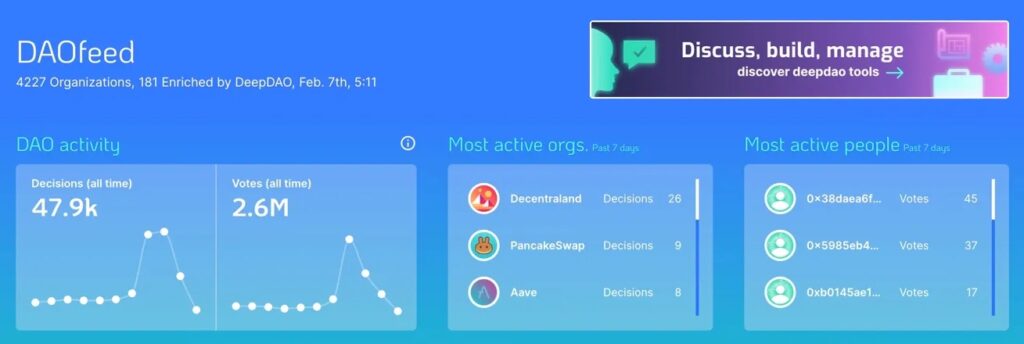
Polycentricity should emerge through a discovery process. This need makes the rapid development of DAO tools even more important. Thankfully we’re seeing DAO tooling that helps:

  • ensure security and voting (e.g. Gnosis Safe, reality.eth)
  • reveal, measure and compensate contributions (e.g. Source Cred, Coordinape)
  • fund and manage treasuries (e.g. Parcel, Juicebox)
  • frameworks (e.g. Zodiac, Orca, Gnosis, Aragon)

The risk today is that those tools are deployed in the same combinations across the suite of existing (and future) DAOs. We should be asking ourselves how these tools can be leveraged to facilitate more polycentric and diverse web3 networks.


Darcy Allen is a researcher and writer on the economics of frontier technologies. Senior Research Fellow, RMIT Blockchain Innovation Hub. Co-founder, Cryptoeconomics Australia.

More information

  • Posted here with permission from Darcy Allen. Originally appeared here: https://darcyallen.substack.com/p/web3-treasuries-and-polycentric-governance
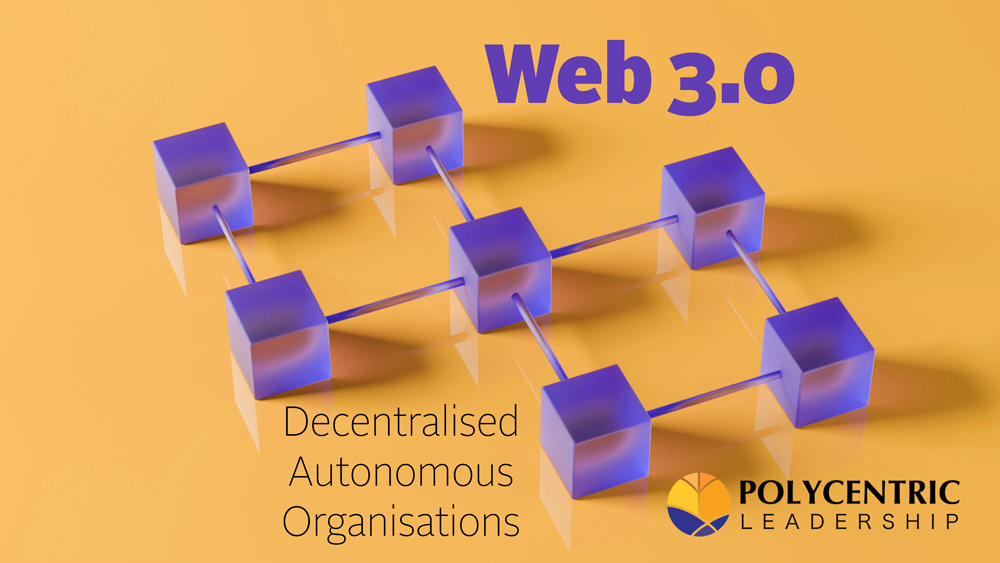
  • Web 3.0 DAO image by Shubham’s Web3 on Unsplash
Please follow and like us:
error
fb-share-icon
Tweet

Filed Under: Guest Post Tagged With: DAO, Darcy Allen, decentrailization, Decentralising leadership, Joseph Handley, management, Polycentric Leadership

You may also like

Polycentric Leadership for DAO’s: Web3 Bootstrapping Strategies – Part 2 Polycentric Structures: Transnationality, Decentralization, and Pluralization of Power The Medici Effect and Leadership Toward a Polycentric Form of Leadership

Case Studies

  • Polycentric Leadership Development: Brief Case Study of the Pan Asia Leaders Dev…
    The Pan Asia Leaders Development (PALD) program, initiated within the A3 network, serves as a present-day prototype of polycentric leadership development. Looking back through the lens of current polycentric leadership scholarship, PALD embodied the principles of shared leadership, distributed authority, and contextualized formation across Asia. Designed and implemented as an experimental leadership ecosystem, it demonstrated how multi-centered structures can form transformational leaders “within, across, and beyond Asia.” [more…]
  • Cambodian Bible College: Pilgrimage from Patronage to Partnership
    At Cambodian Bible College, mission began within a familiar pattern of provision and dependence. Over time, that pattern was challenged, giving rise to a gradual, uneven shift toward shared leadership and polycentric partnership. This case study tells the story not of arrival, but of a continuing pilgrimage from patronage to partnership. [more…]
  • Shifting the Leadership Paradigm: How Polycentric Leadership Transformed Our Tea…
    By JOSHUA NURCOMBE-PIKEGlobal Theological Educator based in the UK “So, any thoughts on this?”  My enthusiastic pitch for a new [more…]
  • YWAM and the Emergence of a Polycentric Leadership Model
    By JOSEPH W. HANDLEY, JR., PH.D. Circles, Circuits, Cycles Over the past two decades, Youth With A Mission (YWAM) has undergone one of the [more…]
  • Polycentric Leadership at All Nations United Methodist Church
    By HUNN CHOI Introduction Polycentric leadership has emerged as one of the most effective approaches to addressing the complexity of [more…]

White Papers

  • Diverse as a Foundational Theme of Polycentric Leadership
    Explore how diverse leadership strengthens polycentric systems by valuing varied perspectives, empowering contextual leadership, and integrating cultural differences to foster innovation, resilience, and mission-aligned collaboration across global networks. [more…]
  • Entrepreneurial as a Foundational Theme of Polycentric Leadership
    Explore how entrepreneurial leadership strengthens polycentric systems by empowering distributed initiative, adaptive experimentation, and mission‑aligned risk‑taking that drive innovation and responsiveness across decentralized contexts. [more…]
  • Relational as a Foundational Theme of Polycentric Leadership
    Relational leadership places trust, mutual accountability, and deep connection at the center of influence, making it essential for effective polycentric leadership. By prioritizing relationships over hierarchy, it strengthens collaboration across cultures and organizations, enabling decentralized networks to stay aligned, resilient, and missionally focused in complex global environments. [more…]
  • Communal as a Foundational Theme of Polycentric Leadership
    Explore the Communal theme of Polycentric Leadership, showing how shared identity, mutual responsibility, and collective discernment shape trust, resilience, and long-term sustainability in decentralized leadership systems. [more…]
  • Collaborative as a Foundational Theme of Polycentric Leadership
    Collaboration sits at the core of polycentric leadership, enabling authority, decision‑making, and accountability to be shared across interconnected centers. This paper explores how collaborative practices strengthen coherence, adaptability, and trust in complex, multi‑layered organizations. [more…]

Book Reviews

Book Review: Joseph W. Handley, Jr., Polycentric Mission Leadership: Toward a New Theoretical Model for Global Leadership

30-June-2026 By Polycentric Leadership

BOOK REVIEW BY TIANJI MA Published in Global Missiology, www.globalmissiology.org, April 2025 Joseph W. Handley Jr. (2022). Polycentric …

[Read More...] about Book Review: Joseph W. Handley, Jr., Polycentric Mission Leadership: Toward a New Theoretical Model for Global Leadership

Book Review: The Covenant Quarterly

22-May-2024 By Polycentric Leadership

Covenant Quarterly 81:2 - https://covquarterly.com/index.php/CQ/issue/view/25/7 Polycentric Mission Leadership - Book Review Joseph W. …

[Read More...] about Book Review: The Covenant Quarterly

Book Review: EMQ

14-December-2023 By Polycentric Leadership

EMQ » July–September 2023 » Volume 59 Issue 3 Polycentric Mission Leadership: Toward a New Theoretical Model for Global Leadership By …

[Read More...] about Book Review: EMQ

Primary Sidebar

Discover Polycentric Leadership…

Check out Polycentric Mission Leadership for an innovative look into the 21st-century mission vision. Available for purchase at Regnum Books, Amazon and Barnes & …

Read more... about Book

Press Kit

  • Bio
  • Images & Logos
  • Interview Requests
  • Link Tree
  • About the Book
  • Order Book

Recent Posts

  • Polycentric Leadership Development: Brief Case Study of the Pan Asia Leaders Development (PALD) Program
  • Diverse as a Foundational Theme of Polycentric Leadership
  • Book Review: Joseph W. Handley, Jr., Polycentric Mission Leadership: Toward a New Theoretical Model for Global Leadership
  • Cambodian Bible College: Pilgrimage from Patronage to Partnership
  • Shifting the Leadership Paradigm: How Polycentric Leadership Transformed Our Team
  • Collaborative Missional Leadership: A Polycentric Vision for the Church in Mission
  • Entrepreneurial as a Foundational Theme of Polycentric Leadership
  • Relational as a Foundational Theme of Polycentric Leadership
  • Communal as a Foundational Theme of Polycentric Leadership
  • Leading Together: Collective, Collaborative, and Network Leadership in a Polycentric Age

Categories

  • Book Reviews
  • Case Studies
  • Charismatic
  • Collaborative
  • Communal
  • Diverse
  • Endorsements
  • Entrepreneurial
  • Guest Post
  • PCL Traits
  • Polycentric Leadership
  • Relational
  • Video
  • White Papers

Popular Topics

A3 Allen Yeh Asia book book review case studies case study charismatic christian leadership church collaboration collaborative DAO Decentralising leadership decentralization definition diverse Elliott Snuggs entrepreneurial global innovation Joseph Handley Kirk Franklin Lausanne Lausanne Movement leader development leadership leadership model leadership principles management Mary Lederleitner missiology mission MissioNexus Noel Becchetti partnership polycentric Polycentric Leadership Stanley McChrystal Takeshi Takazawa teams traits trinitarian video World Evangelical Alliance

Continue the Discussion

Let’s talk further. Feel free to connect with me on social media or via email. You can find out more here… 

  • •  Joe Handley’s blog
  • •  Joe Handley’s bio

Stay Updated

Get new posts by email...

Footer

Follow PCL

RSS
Follow by Email
Facebook
Facebook
fb-share-icon
Twitter
Visit Us
Follow Me
Post on X
LinkedIn
LinkedIn
Share
YouTube
YouTube
Set Youtube Channel ID
Instagram

Search

Copyright © 2020–2026 Polycentric Leadership · Design by HCS · Log in

  • About
  • Articles
  • Book
  • Resources
  • Privacy
  • Contact